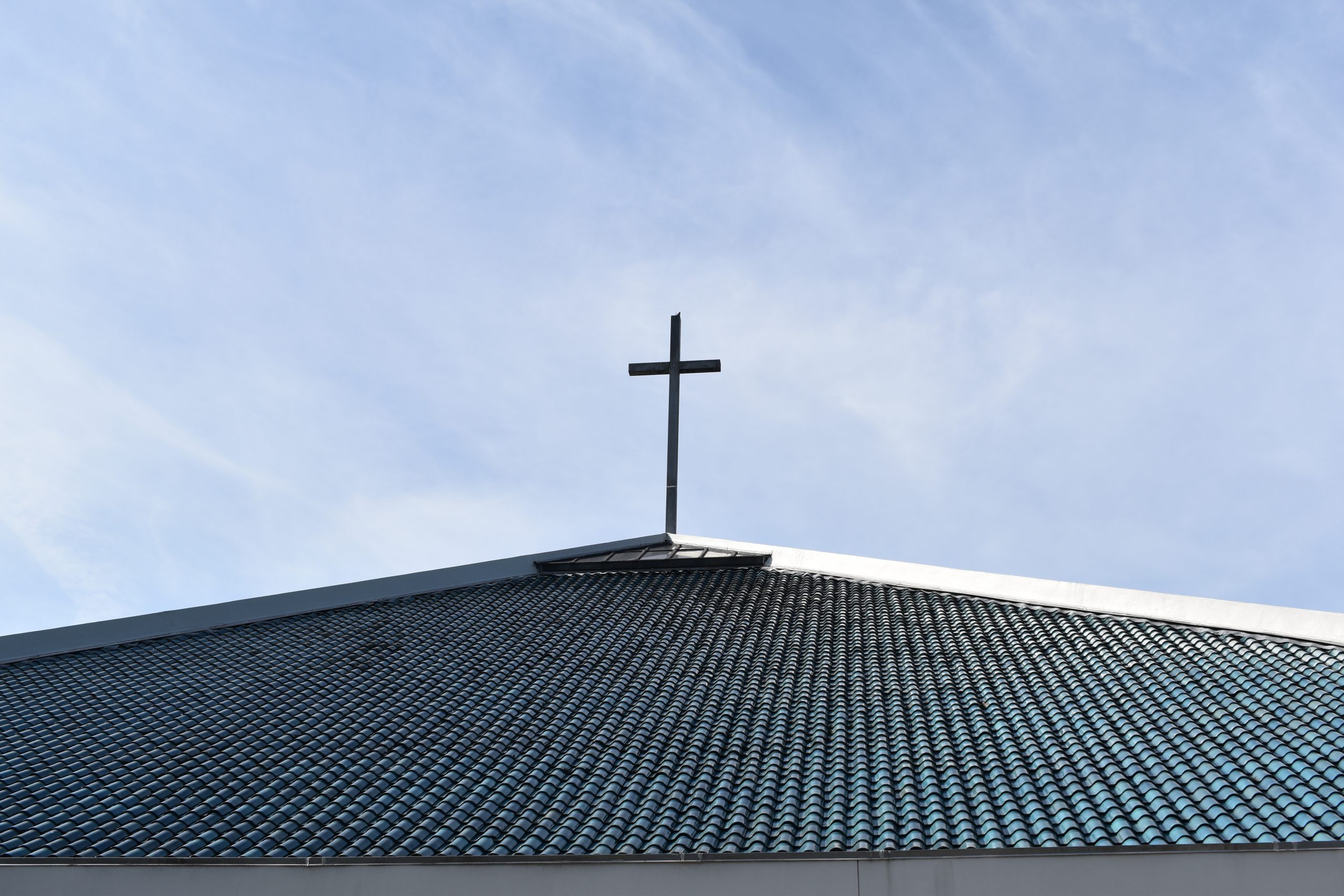
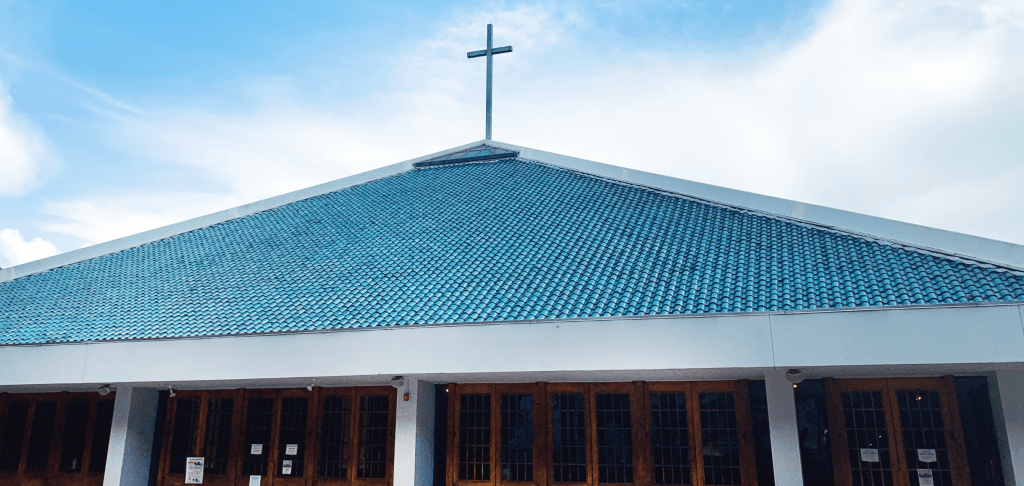
On 12/12/21, we welcomed our 5th Pastor! Msgr. Michael Carruthers was installed on Gaudete Sunday by the Most Reverend Gregory L. Parkes, Bishop of the Diocese of St. Petersburg. It was a beautiful day of celebration. May the Lord look upon St. Lawrence and bless our Pastor as he leads us.
On July 1st, St. Lawrence will be welcoming a new Pastor and a new Parochial Vicar to our parish family, respectively Msgr Michael Carruthers and Father Higinio Rosolen. We are excited and grateful to have them joining us! Below, you can learn a little more about each of them before their arrival.
Father Dan and Father Kyle would like to express again how much their time here has meant to each of them. They have made lasting memories and friendships, and will continue to pray fondly for St. Lawrence as they move to Ressurection Parish and St. Mary Parish. We, in turn, pray for both of them during their unique transitions and rejoice in the gift of their dedicated, faith-filled service. If their time here as been any indication, we know that they will both go onto do great things.
God bless you both, as well as the new priests joining our parish!
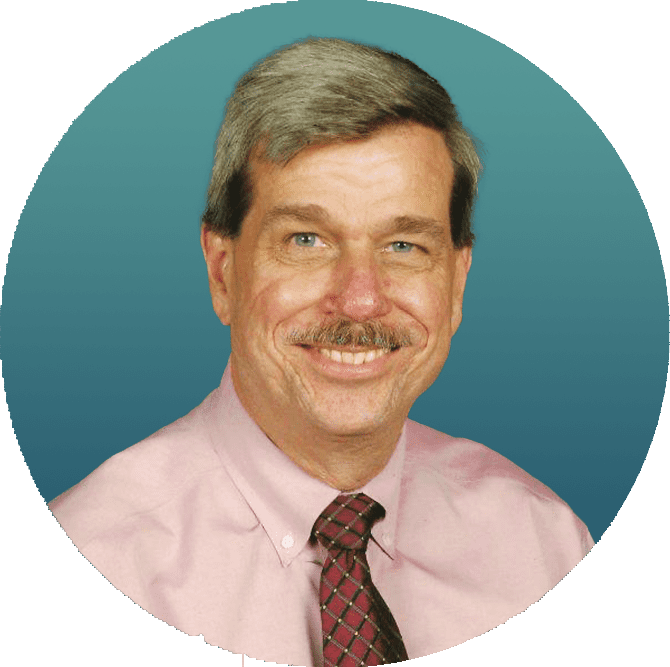
Monsignor Michael Carruthers was born May 6, 1964 in Manhasset, New York. He moved to South Florida with his family in 1973. He was a member of St. Martin de Porres Parish in Jensen Beach and attended public schools, graduating from Martin County Senior High and Indian River Community College. In 1984, he entered St. John Vianney College Seminary in Miami, and completed his studies for the priesthood at St. Vincent de Paul Regional Seminary in Boynton Beach. He was ordained for the Archdiocese of Miami May 11, 1991. He served as parochial vicar at Epiphany Parish, South Miami, before being named priest-secretary to Miami’s second and third archbishops: first, Archbishop Edward McCarthy, and then, Archbishop Emeritus John C. Favalora. Msgr. Carruthers then served as parochial vicar at Immaculate Conception Church in Hialeah, where he resided while obtaining a master’s degree in exceptional student education from Florida International University, with a specialization in autism.
In 2005, he was named rector of St. John Vianney College Seminary in Miami. Five years later, in August 2010, he was named pastor of St. Augustine Church and Catholic Student Center in Coral Gables. He was given the honorary title of Monsignor by Pope Benedict XVI in March 2008. In July 1, 2019, he began serving as parochial administrator of Resurrection. He will be incardinated as a priest of the Diocese of St Petersburg on July 1, 2021 and installed as pastor of St. Lawrence Catholic Church on the same day.
“Trust Him when dark doubts assail thee; trust Him when trust is small. Trust Him when simply to trust Him is the hardest thing of all.” -Archbishop Fulton J. Sheen
Father Higinio Rafael Rosolen is an Italian-Argentinian priest. He was ordained on August 29th, 2003. After earning his degree in Biblical Studies at the Biblicum (Rome), he ministered in different pastoral activities in Italy, Greece and Canada. He gave conferences, conducted seminars and preached retreats and parochial missions in several countries. For the past five years he has been on Faculty as professor and formator at Saint Vincent de Paul Regional Seminary in Boynton Beach (Florida). Among his publications are included “Una introducción a la lectura del Evangelio según San Marcos” and “Tras los pasos de San Pablo. El inicio de la aventura misionera.” He is member of the Catholic Biblical Association. He is looking forward to start his assignment at St Lawrence Catholic Church!

Bishop Gregory Parkes announced that the obligation for Catholics to attend Mass on Sunday will resume on May 22, 2021, the vigil of Pentecost. This announcement was made at the Cathedral of St. Jude the Apostle in St. Petersburg during the annual Chrism Mass on March 30th.
“It’s my intention that the general dispensation from the obligation to attend Sunday Mass issued last March will be lifted effective on the vigil of Pentecost, which is the weekend of May 22 and 23. We will be updating and providing suggested protocols and guidelines to our parishes so that they remain among the safest places to be.”
He also added: “On April 5th, the vaccine will be made available to every adult in our diocese, and in the state of Florida. This is a reason for hope. In the same way that many are returning to shopping, to restaurants, social gatherings, and vacations. It’s time to come back to Mass. It’s time to come back to church, it’s time to come home.”
The bishop has written a letter about the general dispensation and a list of circumstances that would necessitate a particular dispensation from the Sunday and Holy Day Mass obligation, which is available in English and Spanish.
To view the video of the bishop’s homily, click here or below.
We are sad to inform that Father Keating passed away peacefully the afternoon of February 1st, 2021.
Wake/Viewing Service
On Monday, February 8th, his wake/viewing service will be an evening of prayer held in the church from 5pm-7pm, with limited seating and COVID-19 restrictions in place. We will also be livestreaming the Diocese Office of the Dead prayer service from 7pm onwards, which will be available to view at any of the links below.
His funeral will be held on February 9th, 2021 at 11am here at St. Lawrence Catholic Church. Masks and social-distancing will be enforced, but overflow seating will be available in Higgins Hall, where the Mass will be on-screen for viewing.
The service will also be livestreamed, available to view at any of the links below.
Edward (Eamon) Keating was born June 2, 1927 in Cork City, Republic of Ireland, one of four children to parents Catherine and Jeremiah Keating. He was a joyful, bright young lad who grew up during the time of the Great Depression and then World War II, greatly impacted by his family’s strong Catholic faith and customs.
“God came first in our lives, then family and society,” he recalls. “We prayed the rosary every night as a family. Our parents not only taught us the faith, they lived it. Even in the toughest of times they would always find a way to help people in need.”
After finishing secondary school young Edward took exams to qualify for a highly sought-after government position. He ended up being offered several but chose a spot in the Accountant’s Branch of the historic Post and Telegraphs in Dublin. In his free time, he landed jobs in the theater as a professional actor.
Life was good. He was experiencing success in his career and in his part-time passion at a young age, and yet he felt something was missing.
Edward attended the Friars Minor novitiate in Killarney for one year, earned degrees in philosophy and economics at Galway University in three years, onto the Catholic University of Louvain in Belgium for theology for one year, then to Rome for three more years. He was ordained a Franciscan priest on July 6, 1958 in the Church of Our Lady of the Sacred Heart in the Piazza Navona in Rome.
After ordination he was assigned as Vice-Rector and Master of Students at the Irish College in Louvain for nine years. His superiors began to recognize that he had special talents, fully capable of handling challenging situations. They sent him to El Salvador for six years in the seventies, a tumultuous period there during the Cold War. He went as a “trouble shooter” and had to quickly learn the Spanish language.
He came back to Ireland briefly, but this time was assigned to Northern Ireland, giving missions there when other friars were reluctant during the peak of the disturbances between the Protestants and Catholics.
If challenges were his specialty, the stakes kept getting higher for him. His next assignment was in Chile, first under the presidency of Marxist Salvador Allende during a period of dramatic economic decline and poverty, and later under dictator Augusto Pinochet when Chile was under martial law, a curfew, and a period of terror.
He returned again to Ireland, continuing his work giving missions and retreats. Always the pragmatist, he met with his Superior and reminded him that he was now fluent in French, Spanish, and Italian but was not putting those skills to use. At exactly that time, a Vicar General in the Diocese of St. Petersburg, Irishman Monsignor Laurence Higgins, had heard that there were priests in Ireland who spoke Spanish and could meet the needs of a growing Hispanic community in Florida.
Edward accepted an assignment to come to Tampa, Florida in 1985, first as Associate Pastor for the Hispanic Community at Incarnation Parish, then to Corpus Christi and St. Catherine of Siena from 1989-1993, before returning home to Ireland for his first “retirement.”
“I went back to Galway, still doing some mission and parish work, minding my own business, when Laurence (Monsignor Higgins) called,” Edward recounts. “He said, ‘Edward, I need you.’ So, I unretired!”
Edward joined Monsignor Higgins at Tampa’s St. Lawrence Parish in 1994. In 2008 he reached the mandatory age when all priests are required to retire from active ministry, though that has been a mere technicality. Even though he became “legally blind,” he continued to celebrate mass and impact parishioners through his unique teaching style until his isolation required by Covid-19.
“Every sermon from Father Keating was like a theology class,” says St. Lawrence Parishioner Bob Best. “I attended Catholic grade school, high school, and college and yet Father Keating is the one who has given me my deepest understanding of the Bible and my faith overall.
“I was taught in my classes in Louvain that you always have to give background information on Old and New Testament readings for people to understand context,” Edward used to say. “Historical background makes things clearer.”
It is not just the laity that Edward continued to assist in “retirement.” Fr. Chuck Dornquast had his first priestly assignment at St. Lawrence as Parochial Vicar, learning from his interactions with Father Keating.
“Fr. Keating was the finest example of what happens when a priest allows his own heart to be overwhelmed by the Heart of God,” says Fr. Dornquast. “In all aspects of his life, be it celebrating sacraments or chatting over lunch, his heart truly did reveal the Father of our Lord Jesus Christ.”
In the works for over 40 years, Father Keating published his book Life and Love: The Cosmic Saga in October 2019, available digitally and in print-on-demand through Amazon. Using cosmology, history and imaginative storytelling to highlight the truth, the book offers a view of Christianity for the 21st century reader in light of divine revelation and discoveries of contemporary science.
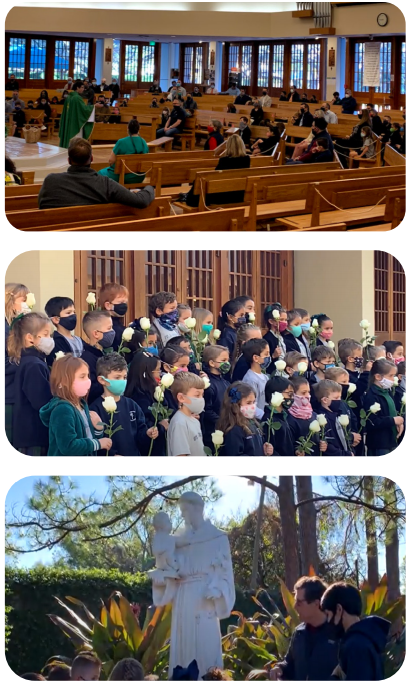
The morning of January 20th, St. Lawrence Catholic Church held a special blessing of the Saint statues on campus. This blessing was headed by the Pastor, Father Dan Kayajan. The parish and school staff were joined by the first graders from St. Lawrence Catholic School, along with many fathers and parents who remained after the Dad’s Mass earlier in the morning. This was the third annual Dad’s Mass tradition, in which fathers of children at St. Lawrence Catholic School are invited to attend weekday Mass with their child and participate in the liturgy together. The first-graders and their families in attendance were thrilled to share their weekly morning mass with their dads!
After Mass, each first-grader was invited to participate in the blessing of the saint statues. Each child was given a white rose to place at the foot of a statue while Father Dan blessed the statues with Holy Water. This special, prayerful morning united faith, family, and our parish-school community.
St. Lawrence would like to extend a special thanks everyone involved in planning these special moments for our parish and school!
When John Fitzgerald Kennedy was asked if his Catholic beliefs would interfere in the discharging of his presidential duties if he were to be elected, he responded with this now-famous quote:
“… I am not the Catholic candidate for president. I am the Democratic Party’s candidate for president, who happens also to be a Catholic. I do not speak for my church on public matters, and the church does not speak for me.”
Religious “litmus tests” in politics picked up speed in the second half of the twentieth century and are currently at the fore as they pertain to Supreme Court nominations in the twenty-first century. Certain beliefs and stances, informed by Christian dogma, are routinely called into question as they pertain to objective civil governance and decision making. Attempts are repeatedly made to expose religious bias and its threat to the rule of law and the Constitution. Ironically, Article VI of that document states “no religious Test shall ever be required as a Qualification to any Office or public Trust under the United States.”
The necessary coexistence of church and state, in one form or another, has been around for centuries, and the tension between the two has posed varying degrees of difficulty in balancing religious beliefs and civic responsibility. The articles of faith in a particular religion can potentially “tip the scales” in the weighing of civil matters. Living a life that is informed by faith and conscience while paying the proper deference to civil law and authority is possible, as illustrated in a “religious test” posed in scripture:
[The Pharisees asked:] “Tell us, then, what is your opinion: Is it lawful to pay the census tax to Caesar or not?” Knowing their malice, Jesus said, “Why are you testing me, you hypocrites? Show me the coin that pays the census tax.” Then they handed him the Roman coin. He said to them, “Whose image is this and whose inscription?” They replied, “Caesar’s.” At that he said to them, “Then repay to Caesar what belongs to Caesar and to God what belongs to God.”
(Matthew 22:17-22)
The “litmus test” involving Caesar, courtesy of the Pharisees, was designed to elicit an “either/or” answer from Jesus. Much to their surprise and dismay, Jesus presented a middle path that could not be refuted. Determining what belongs to God and what belongs to “Caesar” can be challenging in certain situations but can be achieved through prayer, deliberation, and reliance on Divine Providence. From a Christian perspective, the First Commandment can set the tone and order of our fidelity to church and state. Putting God first while sorting through the “strange gods” of civic governance and politics, requires sober prayer and thought. Paying taxes on our hard-earned income is a burden in and of itself and becomes more oppressive when spent to fund concerns to which our beliefs are opposed. St. Paul, in his letter to the Romans, has this to say:
Let every person be subject to the governing authorities; for there is no authority except from God,and those authorities that exist have been instituted by God.
(Romans 13:1)
Negotiating daily life within the spheres of family, church, and civil obligations can easily tilt out of balance in modern life. Careful discernment and deliberation, especially involving the weightier issues of human existence, require the divine assistance that God is ready and willing to offer.
In the general election of 2020, the division among the electorate is more pronounced than ever. Voting blocs, once fairly monolithic, are undergoing shifts that are seismic in many cases. Gone are the days when a given group could speak with one voice. The polling methods of the past, once fairly accurate, have been replaced with algorithms and a plethora of computer programs. The political landscape has become something akin to the Wild West, with a lot of unsettled lands to be plowed. The fastest gunfighters of the past have been replaced by those most adept at slinging commentary across the landscape of social media.
Let us pray for ongoing discernment as we balance faith and citizenship in casting the nets of our faith in evangelization, and our votes in the upcoming elections.
Cuando se le preguntó a John Fitzgerald Kennedy si sus creencias Católicas interferirían en el desempeño de sus deberes presidenciales si fuera elegido, respondió con esta frase ahora famosa:
“… No soy el candidato Católico a la presidencia. Soy el candidato presidencial del Partido Demócrata, que también es Católico. No hablo por mi iglesia sobre asuntos públicos y la iglesia no habla por mí.”
Las “pruebas de fuego” religiosas en la política se aceleraron en la segunda mitad del siglo XX y actualmente están en primer plano en lo que respecta a las nominaciones a la Suprema Corte en el siglo XXI. Ciertas creencias y posturas, informadas por el Dogma Cristiano, se cuestionan rutinariamente en lo que respecta a la gobernanza civil objetiva y la toma de decisiones. Se intentan repetidamente exponer los prejuicios religiosos y su amenaza para el estado de derecho y la Constitución. Irónicamente, el artículo VI de ese documento establece que “nunca se requerirá ninguna prueba religiosa como cualificación para ninguna oficina o fideicomiso público de los Estados Unidos”.
La necesaria coexistencia de la iglesia y el estado, de una forma u otra, ha existido durante siglos, y la tensión entre los dos ha planteado diversos grados de dificultad para equilibrar las creencias religiosas y la responsabilidad cívica. Los artículos de fe en una religión en particular pueden potencialmente “inclinar la balanza” en el peso de los asuntos civiles. Es posible vivir una vida que esté guiada por la fe y la conciencia mientras se presta el debido respeto a la ley y la autoridad civiles, como se ilustra en una “prueba religiosa” planteada en las Escrituras:
[Los fariseos preguntaron:] “Dinos, entonces, cuál es tu opinión: ¿Es lícito pagar el impuesto del censo al César o no?” Conociendo su malicia, Jesús dijo: “¿Por qué me ponen a prueba, hipócritas? Muéstrame la moneda que paga el impuesto del censo “. Luego le entregaron la moneda romana. Él les dijo: “¿De quién es esta imagen y de quién es la inscripción?” Ellos respondieron: “De César”. Ante eso, les dijo: “Entonces páguenle al César lo que es del César y a Dios lo que es de Dios”.
(Mateo 22: 17-22)
Esta “prueba de fuego” que involucra a César, cortesía de los fariseos, fue diseñada para obtener una respuesta de “una o la otra” de Jesús. Para su sorpresa y consternación, Jesús presentó un camino intermedio que no podía ser refutado. Determinar lo que pertenece a Dios y lo que pertenece al “César” puede ser un desafío en ciertas situaciones, pero se puede lograr mediante la oración, la deliberación y la confianza en la Divina Providencia. Desde una perspectiva cristiana, el Primer Mandamiento puede dar la pauta y el orden de nuestra fidelidad a la Iglesia y al estado. Poner a Dios en primer lugar mientras clasifica a los “dioses extraños” del gobierno y la política, requiere oración y pensamiento sobrios. Pagar impuestos sobre nuestros ingresos ganados con esfuerzo es una carga en sí misma y se vuelve más opresivo cuando se gasta para financiar asuntos opuestos nuestras creencias. San Pablo, en su carta a los Romanos, dice lo siguiente:
Que toda persona esté sujeta a las autoridades gobernantes; porque no hay autoridad excepto de Dios, y esas autoridades que existen han sido instituidas por Dios.
(Romanos 13: 1)
Negociar la vida diaria dentro de las esferas de la familia, la iglesia y las obligaciones civiles puede desequilibrarse fácilmente en la vida moderna. El discernimiento y la deliberación cuidadosos, especialmente en los asuntos más importantes de la existencia humana, requieren la ayuda divina, la cual Dios está listo y dispuesto a ofrecer.
En las elecciones generales de 2020, la división entre el electorado es más pronunciada que nunca. Los bloques de votación, que alguna vez fueron bastante monolíticos, están experimentando cambios que son sísmicos en muchos casos. Atrás quedaron los días en que un grupo determinado podía hablar con una sola voz. Los métodos de sondeo del pasado, que alguna vez fueron bastante precisos, han sido reemplazados por algoritmos y una gran cantidad de programas de computadora. El panorama político se ha convertido en algo parecido al viejo oeste, con una gran cantidad de tierras sin colonizar para arar. Los pistoleros más rápidos del pasado han sido reemplazados por los más expertos en lanzar comentarios en el panorama de las redes sociales.
Oremos por un discernimiento continuo mientras equilibramos la fe y la ciudadanía al echar las redes de nuestra fe en la evangelización y nuestros votos en las próximas elecciones.
Jesus said: “Going out about five o’clock, [the landowner] found others standing around, and said to them, ‘Why do you stand here idle all day?’ They answered, ‘Because no one has hired us.’ He said to them, ‘You too go into my vineyard.’” (Matthew 20:6-7 NABRE)
Dcn. Greg Lambert
One of the hardest aspects of being without a job is finding gainful employment, especially in a new career path. Even if you stay in your field, you face formidable competition from others vying for the same position. These days, finding work between jobs might be accomplished in the realm of what is termed as the “gig economy.” Driving passengers and delivering various items pay a fixed rate per delivery or trip. Working in this way still requires customers to “hire” you. The stability that a full-time job provides gives way to the tentative aspects of sporadic work for hire.
Another approach to employment involves taking on a part-time job with reduced hours that often come with no benefits. Temporary employment, usually through an agency, is another option. Day labor, perhaps the least desirable way of finding work, involves showing up for the possibility of being chosen to work for that day. Oftentimes, after being ready, willing, and able, being passed over is a common occurrence in the life of a day laborer.
The Willingness to Work Waiting for hire in any of the above situations is stressful and can easily be construed by others as “standing idle.” In the parable of the tenant farmers, we find a group of workers waiting to be “called.” Some are called right away, while others are called later at various times throughout the day. There is a “call and response” between the employer and the worker. The terms for the day are presented to each individual and agreed upon. According to the parable, everyone who is called goes to work in the vineyard, albeit at different times.
At the end of the day, as the workers are called from last to first, each receives their agreed-upon wage. A certain sense of fairness comes into question among some of the workers, and the parable ends by emphasizing the owner’s generosity over any subjective view of entitlement. A willingness to work, along with patience and tenacity, makes a powerful combination to have while waiting to be hired.
It is important to note that once a full-time job is obtained, the requirements of the job must be met and hopefully exceeded. Once employed, it is incumbent on the employee to readily adapt to and embrace ulars of the job they have obtained. While apparent idleness might be excused during unemployment, it is not well tolerated in the workplace. Directives are issued and goals are set to ensure the health and well-being of the company.
Go and Work in the Vineyard In biblical terms, it could be said that the head of a given company represents the “father”, and the employees are the “sons” in the following illustration:
Jesus said to the chief priests and the elders:] “What do you think? A man had two sons; he went to the first and said, ‘Son, go and work in the vineyard today.’ He answered, ‘I will not’; but later he changed his mind and went. The father went to the second and said the same; and he answered, ‘I go, sir’; but he did not go. Which of the two did the will of his father?” They said, “The first.” Jesus said to them, “Truly I tell you, the tax collectors and the prostitutes are going into the kingdom of God ahead of you.” (Matthew 21:28-31 NRSVCE)
Doing the Father’s will, both in ancient Palestine and today, involves a willingness and readiness to respond to particular directives (commandments). A paraphrase of a quote from St. Teresa of Calcutta, “Be where you are supposed to be, and do what you are supposed to do,” applies to work in general, and especially to work in the vineyard of ministry and evangelization.
Conclusion While it is true that you “can’t put the cart before the horse” in terms of finding work, once employment is secured, the resolve that was once used to get a job can be channeled into the productivity and loyalty necessary for the mission at hand.
During this time of pandemic and economic downturn, let us pray for the grace to discern God’s will, the patience to wait on the Lord for employment in the workplace as well as in the vineyard of ministry.
La Comisión Hispana anuncia la Misa Hispana Diocesana anual en honor a Nuestra Señora de la Caridad del Cobre, patrona de Cuba. La Misa será presidida por monseñor Gregory L. Parkes el sábado 10 de octubre, 2020, a las 10:00 a.m. en la Catedral de St. Jude the Apostle, 5815 5th Ave. North, St. Petersburg. Este año no habrá procesión de banderas pero rezaremos el rosario a las 9:30 a.m. antes de la Misa.
Debido a las limitaciones de espacio resultantes de la actual pandemia COVID-19 las personas interesadas en asistir a la Misa tendrán que inscribirse aquí por orden de llegada. De llegar al cupo te invitamos a ver la Misa en vivo en nuestros canales de Livestream, Facebook o Youtube. Para obtener más información, llama a Mercedes Cedeño al 727-344-1611 ext. 5471.
The Hispanic Commission announces the annual Diocesan Hispanic Mass in honor of Our Lady of Charity of El Cobre, patroness of Cuba. The Mass will be presided by Bishop Gregory L. Parkes on Saturday, October 10, 2020, at 10:00 a.m. at the Cathedral of St. Jude the Apostle, 5815 5th Ave. North, St. Petersburg. This year, we will not have the procession of flags but we will gather at 9:30 a.m. to pray the Rosary before the Mass.
Due to spacing limitations resulting from the current COVID-19 pandemic, persons interested in attending the Mass will need to register here on a first-come-first-serve basis. Space is limited. If registration is full we invite you to watch the Mass via our Livestream,Facebook or Youtube. For more information contact Mercedes Cedeño at 727-344-1611 ext. 5471.